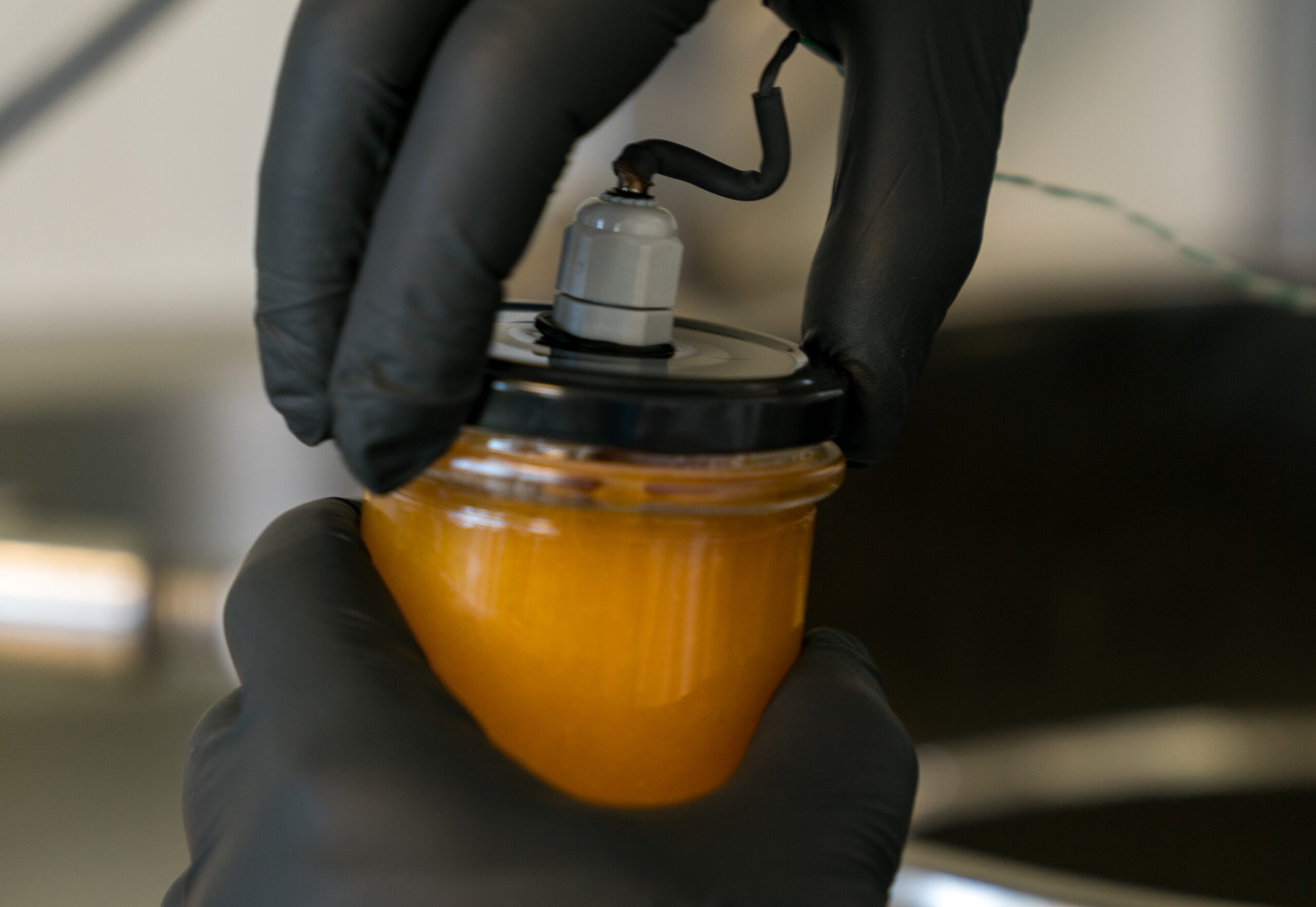
Sterilization vs pasteurization is the first choice to make when you want to guarantee the microbiological safety of a preserved food. These are the two reference heat treatments: they reduce or eliminate pathogenic bacteria, molds and yeasts, extending the product’s shelf life. The difference between the two lies in treatment temperatures and times, with a direct impact on the taste, color and texture of the finished product. The Coveser Multipurpose Workstation is designed to handle both processes in a single unit.
Getting the sterilization vs pasteurization choice wrong, or applying the treatment inconsistently, puts both food safety and the shelf life declared on the label at risk. Knowing when pasteurization is enough and when sterilization is necessary is not a minor technical detail: it determines whether a product can be safely stored at room temperature or needs refrigeration.
Pasteurization vs Sterilization: how to choose
The choice depends on a single question: how acidic is the product?
Acidity is measured by pH. The value to remember is 4.6:
- pH up to 4.6 (acidic product): pasteurization is enough. The acidity itself prevents the growth of the most dangerous bacteria, so a more intensive treatment is not needed. Pasteurization is a gradual, low-intensity process: the product is held at a temperature between 60 and 75 °C for about thirty minutes.
- pH above 4.6 (low-acid product): sterilization is required, a more drastic process. Only temperatures above 100 °C eliminate the heat-resistant spores that could remain in the product, such as those responsible for botulism.
Differences between sterilization and pasteurization
- Temperature: pasteurization stays below 100 °C, while sterilization goes above 100 °C.
- Product pH: pasteurization suits acidic products (pH ≤ 4.6), sterilization is required for low-acid ones (pH > 4.6).
- Spores: pasteurization cannot eliminate heat-resistant spores such as those of Clostridium botulinum, sterilization can.
- Shelf life and label: pasteurized foods have a limited shelf life, often requiring refrigeration, and carry the “use by” date, which is also tied to product safety. Sterilized foods keep for a long time even at room temperature and carry the “best before” date, which indicates a minimum period of guaranteed quality.
- Impact on quality: pasteurization is gentler, while sterilization alters more aromas and nutrients.
The limits of sterilization
In the sterilization vs pasteurization trade-off, sterilization guarantees a long shelf life but comes at a price: many of the aromas and nutrients in food are sensitive to high temperatures. Heat alters them and compromises quality, so sterilized foods can taste different and have a lower nutritional value than the fresh product.
The way to limit the damage is not to treat more than necessary. Multipurpose Workstation, with dedicated programs and precise control of temperature and time, each product receives only the treatment it needs.
Sterilization vs pasteurization in practice, with the Multipurpose Workstation
Pasteurization is generally enough for acidic or very sugary products such as:
- jams and marmalades
- fruit juices and concentrates
- syrups
- candied and caramelized fruit
- sauces and tomato passata
Sterilization is generally required for low-acid products such as:
- ready-made sauces, especially with meat or vegetables
- pickled and oil-preserved vegetables
- savory creams
- baby food
- vegetable preserves
Note that the same product category can fall on either side: a tomato passata is acidic enough for pasteurization, while a tomato-based sauce enriched with meat or vegetables may exceed pH 4.6. This is why the sterilization vs pasteurization decision depends on the pH of the finished product, not on the type of product.
Multipurpose Workstation can carry out both treatments: the program changes, not the machine. Before setting the cycle, the first step is always to measure the pH of the finished product. It is this value, and not the type of product, that tells you which treatment is needed.
Sterilization vs pasteurization: the risks of choosing the wrong treatment
- Heat treatment insufficient for the product’s pH: low-acid products (pH > 4.6) require sterilization, because pasteurization alone cannot eliminate Clostridium botulinum spores.
- Over-treating acidic products: applying sterilization to a product that is already acidic enough (pH ≤ 4.6) means more energy consumption and longer process times than necessary, as well as a negative impact on color, texture and taste.
- Batch-to-batch inconsistency: without a system that records and repeats the same parameters (temperature, time, pressure), the heat treatment varies from batch to batch, with a risk of under-treatment in some cases.
- Lack of traceability: without recording the process parameters, it is difficult to demonstrate HACCP compliance, a critical issue especially for exporters.
How the Multipurpose Workstation solves sterilization vs pasteurization dilemma
The Coveser Multipurpose Workstation integrates both treatments in the same unit, with parameters (temperature, time, pressure) that can be set and recalled by recipe. This means:
- Fewer treatment errors: with the Multipurpose Workstation, the recipe saved in the system ensures that every batch receives exactly the right heat treatment for its pH.
- Repeatability batch after batch: the same parameters are applied consistently, eliminating the variability typical of manual handling.
- Complete traceability: the parameters of every cycle are recorded in the system.
- Production flexibility: with the Multipurpose Workstation, switching from a pasteurized product to a sterilized one does not require changing equipment, only recalling the right recipe.
Heat treatment traceability with the Multipurpose Workstation: the role of the data logger
When producing preserves, pasteurizing or sterilizing correctly is not enough: you also need to be able to prove that the treatment was carried out properly. The Multipurpose Workstation integrates a data logger that records all sterilization and pasteurization processes, saving the temperatures and times of every cycle. The data can be conveniently downloaded via USB and archived on a computer or printed at any time.
This way, every batch processed in the Multipurpose Workstation has its own treatment history. A concrete advantage for product traceability, for quality control, and for the HACCP documentation required during inspections, audits or exports.
Why to choose Coveser Multipurpose Workstation?
For those who make a variety of preserves, being able to handle pasteurization and sterilization on the same unit, with tracked and repeatable parameters, eliminates one of the most critical risks of artisanal production: the wrong or inconsistent heat treatment. The Multipurpose Workstation turns a delicate choice into a standardized procedure.
Want to learn more about the Multipurpose Workstation? Discover the complete guide or contact our technical team for a personalized consultation.
Can I do both pasteurization and sterilization with the same Multipurpose Workstation?
Yes, with the Coveser Multipurpose Workstation: the program changes, not the unit.
What production capacity does the Multipurpose Workstation have?
The Coveser multifunction unit is available in different models depending on customer needs. It features either a single tank or independent double tanks. The two tanks can work in parallel — for example, two different recipes, or two different stages of the same product — increasing output without the need for additional machines.
What heating options are available?
The machine is available in steam or electric versions, allowing it to adapt to the energy resources already available on-site and optimize operating costs.
Is the Multipurpose Workstation suitable for small labs, or only for industrial production?
It is designed for a wide range of settings: artisanal labs, small food industries, and R&D departments. The ability to save recipes and recall them for every production run makes it suitable even for businesses without a dedicated technical team, since it eliminates the variability tied to individual operator sensitivity.
How much does a Coveser Multipurpose Workstation cost?
The price varies depending on the configuration (tank capacity, heating type, requested options). For a customized quote based on your production volumes, you can request a quote directly from the product page or contact the Coveser team for a free consultation.
Request a free consultation
To find out which configuration best suits your volumes and products.